Strength · 6 min read
Strength after 50 is a conversation, not a punishment
By Lori Anderson · September 15, 2026
Somewhere around our mid-forties, many of us notice it quietly: the grocery bag feels heavier, getting up from the floor takes a moment longer, and the stairs ask a little more of us than they used to. This isn't failure — it's physiology. After about age 40, we naturally lose muscle at a slow trickle each year unless we actively ask our bodies to keep it.
The encouraging news is that muscle is remarkably responsive at every age. Studies of adults in their 60s, 70s, and beyond show meaningful strength gains within just a few months of consistent, moderate resistance training. Your body is still listening. It simply wants to be spoken to kindly and consistently.
Why strength matters more now
Muscle is not only about how we look or what we can lift. It protects our bones, steadies our blood sugar, supports our joints, and — perhaps most importantly — it is what keeps everyday life easy. Carrying groceries, traveling, playing on the floor with grandchildren: these are strength activities, and they are worth training for.
During perimenopause and menopause, shifting estrogen levels accelerate muscle and bone loss. This makes strength training one of the most loving, protective things you can do for your future self.
A gentler way to begin
You do not need a gym membership, heavy barbells, or punishing workouts. You need a starting point that respects where your body is today. In my practice, we usually begin with:
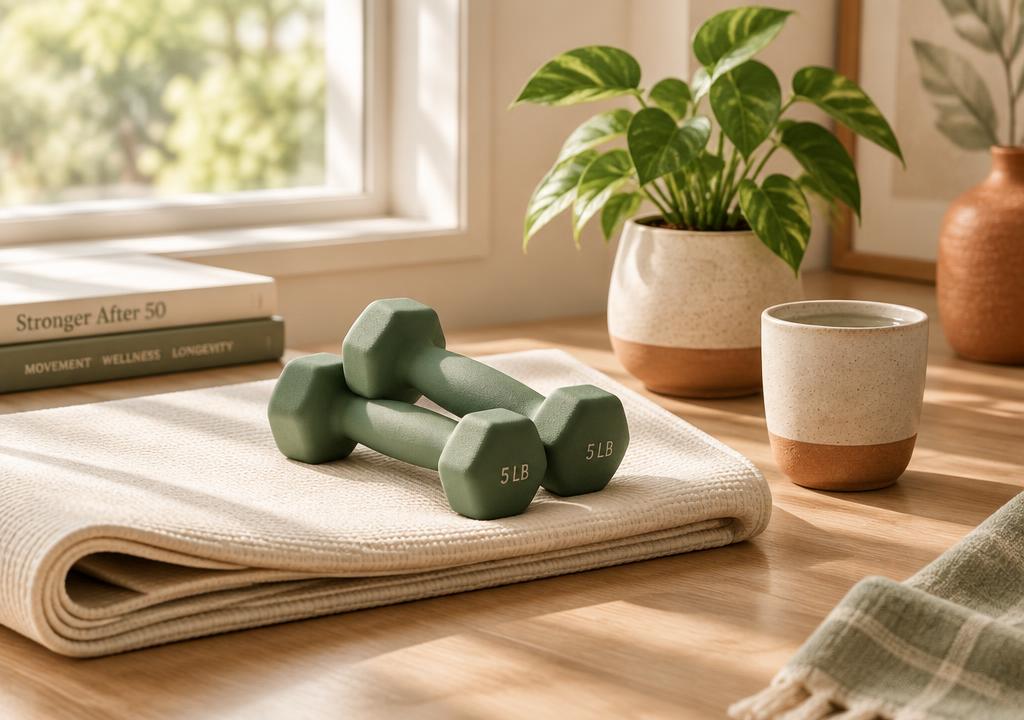
- Two sessions a week of simple, full-body movements — squats to a chair, wall or countertop push-ups, light dumbbell rows, and gentle loaded carries
- Weights that feel comfortably challenging by the last few repetitions, never straining
- Slow, controlled tempos that protect joints while still building real strength
- Five minutes of mobility work before and after, so the body feels cared for rather than punished
Progress here is measured in weeks and months, not days. Add a little weight or a repetition or two when things feel easy, and give yourself full permission to have lighter days.
The conversation continues
Think of strength training after 50 as an ongoing dialogue with your body. Some weeks it will say 'yes, more.' Other weeks it will ask for rest, and that is information, not failure. When we stop treating exercise as punishment and start treating it as partnership, consistency follows naturally — and consistency is where the magic lives.
If you'd like guidance building a strength practice that fits your body and your life, I'd love to help. A discovery call is simply a conversation — no pressure, no jargon.
Want guidance that fits your body?
I work with women in midlife across Orange County and online. A discovery call is simply a conversation — no pressure, no jargon.
Book a discovery call