
Hormones · 8 min read
Belly weight in midlife: why it shows up and what actually helps
By Lori Anderson · October 26, 2026
"I'm eating the same way I always have, and my jeans don't fit around the waist anymore." I hear some version of this almost every week. Usually it comes with a little embarrassment, like she must be doing something wrong. She isn't. Her body changed the rules, and nobody told her.
As a menopause coach and personal trainer, I want to explain what's really going on, what to stop doing, and give you a plan you can start this week.
What's actually happening
Three things are working against you at once.
- Estrogen is dropping. Before menopause, estrogen sends fat to your hips and thighs. As it falls, your body starts storing more fat around your belly instead. Research shows belly fat can rise noticeably during the menopause transition even when total weight barely changes
- You're losing muscle. Adults lose roughly 3 to 8 percent of their muscle each decade after 30, and the loss speeds up around menopause. Less muscle means you burn less energy all day long, even sitting on the couch
- Cortisol is higher. Poor sleep, hot flashes at night, and the stress of caring for kids, parents and a career all raise cortisol. Cortisol tells your body to store fat right at your middle, and it makes you crave sugar at 3 p.m.
This matters for more than your jeans. The fat that settles deep around your organs is linked to heart disease and type 2 diabetes, and heart disease is still the top health risk for women after menopause.
What to stop doing
Most of us were raised on advice that works against a midlife body. If any of these sound familiar, it's time to let them go.
- Eating 1,200 calories a day. Cutting hard makes you lose muscle along with fat, which slows your metabolism even more. Then the weight comes back, often with extra
- Doing hours of cardio. Cardio is good for your heart, but long sessions on their own don't protect muscle and can raise cortisol when you're already worn out
- Skipping breakfast and grazing all afternoon. This is the pattern I see most, and it usually ends with a big dinner and a sugar craving at night
- Thinking wine helps you sleep. It may help you fall asleep, but it wakes you up at 2 or 3 a.m. and adds calories you don't notice
What actually works
Strength training. This is the big one. Two or three sessions a week of 20 to 40 minutes is enough. Squats, lunges, rows, push-ups and carrying heavy things all count. Pick a weight that feels hard by the last few reps. Light weights for lots of reps won't give your muscles a reason to grow.
Protein at every meal. Aim for about 25 to 30 grams each time. Here's what that looks like:
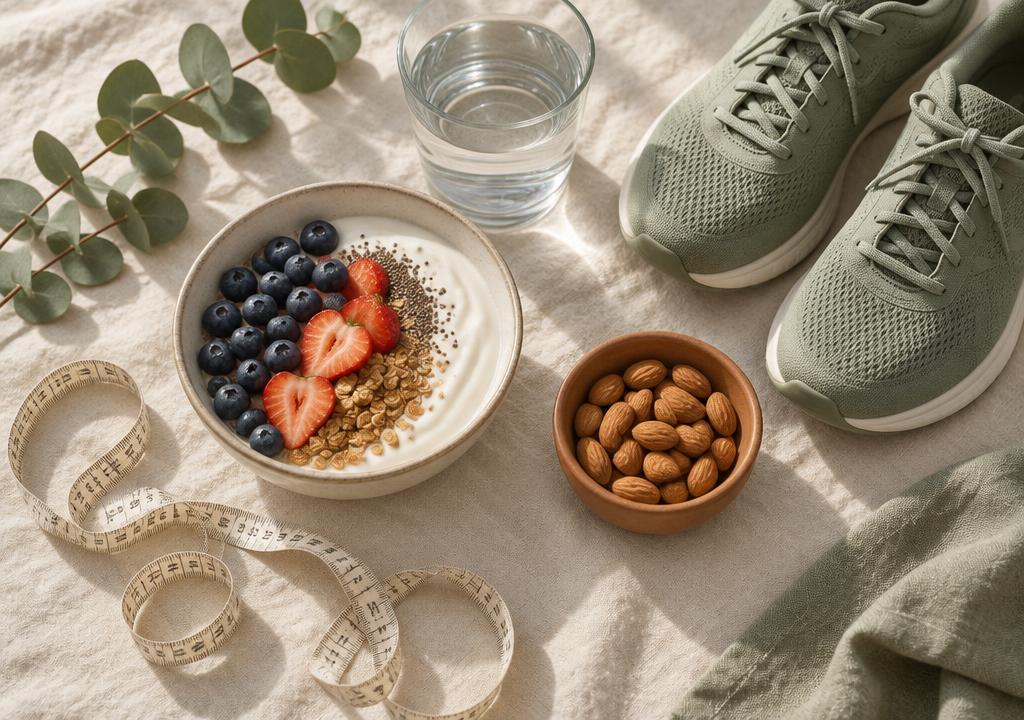
- Breakfast: a cup of plain Greek yogurt with berries and a spoonful of nuts, or 3 eggs with a slice of whole grain toast
- Lunch: a big salad with a palm-and-a-half of chicken or salmon, plus chickpeas
- Dinner: a piece of fish, lean beef or tofu about the size of your hand, with vegetables and a small scoop of rice or potatoes
- Snack if you need one: cottage cheese, a protein shake, or turkey roll-ups
Fiber. Most women get about half the 25 grams a day they need. Beans, lentils, berries, oats, chia and vegetables keep you full and help your blood sugar stay steady.
A walk after meals. Even 10 minutes after dinner helps your body handle blood sugar. Living in Orange County, we have no excuse. Get outside, around the block or down to the beach.
Sleep and stress. If you're waking at 3 a.m. or running on empty, that's part of your belly fat story. Keep the same bedtime every night, stop caffeine by noon, and take five minutes a day to slow your breathing. A simple nervous system reset before bed can make a real difference.
Your one-week starter plan
Don't try to change everything on Monday. Start here:
- Days 1 and 2: Add protein to breakfast. That's it. Notice how much less you snack in the afternoon
- Day 3: Do your first strength session. Squats to a chair, wall push-ups, and rows with a resistance band. 3 rounds of 10 each
- Day 4: Take a 10-minute walk after dinner
- Day 5: Measure your waist at your belly button and write it down. This is your starting point
- Day 6: Second strength session, same moves, a little heavier if you can
- Day 7: Skip the wine tonight and pay attention to how you sleep
Watch the tape, not just the scale
Once you start lifting, you may gain muscle while losing fat, so the scale can be slow to move. Measure your waist once a month and pay attention to how your clothes fit and how strong you feel. For women, a waist over 35 inches is linked to higher health risk, so it's a number worth knowing.
If you're doing all of this and nothing changes, or you also feel unusually tired, cold or foggy, talk with your doctor. Thyroid problems, insulin resistance and some medications can all play a part, and hormone therapy is worth asking about too.
You don't have to figure this out alone
You don't need a crash diet or two hours a day at the gym. You need a plan built around your body, your schedule and your life. That's what I do with my clients here in Orange County, from strength workouts to meals that actually keep you full.
If this sounds like you, send me a message and tell me what you've already tried. I read every message myself and reply the same day, and we'll figure out your next step together.
Want guidance that fits your body?
I work with women in midlife across Orange County and online. A discovery call is simply a conversation: no pressure, no jargon.
Book a discovery call